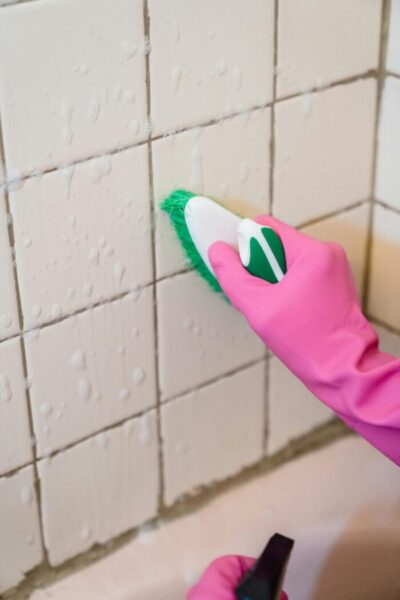
Image credit: by Liliana Drew
Bleach isn’t just a household cleaner—it’s a powerful chemical agent that breaks down stains and kills germs at the molecular level. Discover the science behind how bleach really works and why it’s so effective at cleaning, whitening, and disinfecting.
What Is Bleach, Really?
Bleach is a chemical compound commonly used in households and industrial settings to remove stains, whiten fabrics, and disinfect surfaces. The most popular type of bleach is chlorine bleach, whose active ingredient is sodium hypochlorite (NaOCl). There’s also oxygen bleach, often used as a gentler, color-safe alternative.
But no matter the type, bleach is not your average soap. It doesn’t just wash away dirt—it chemically alters the structure of unwanted substances.
The Chemistry of Clean – How Bleach Removes Stains
Here’s where the science gets interesting: bleach works through a process called oxidation.
Many stains, like wine, coffee, or blood, have compounds called chromophores.
Chromophores are molecular structures that absorb certain wavelengths of light, giving the stain its color.
When bleach is applied, sodium hypochlorite releases reactive oxygen species that break the chemical bonds in these chromophores.
Once these bonds are broken, the molecules no longer absorb visible light, making the stain appear colorless—or gone altogether.
Fun Fact: This is why bleach is so effective at whitening—you’re not just removing dirt, you’re actually altering the molecular structure of the stain.
How Bleach Kills Germs
In addition to stain removal, bleach is also a powerful disinfectant.
It destroys bacteria, viruses, and fungi by denaturing their proteins.
Denaturing means the bleach unfolds and breaks the proteins that make up these organisms, rendering them inactive.
This makes bleach one of the most effective tools for sanitizing surfaces, especially in kitchens, bathrooms, and hospitals.
Imagine bleach as a tiny assassin—it doesn’t just wipe out germs; it destroys their very ability to function.
Why Bleach Should Be Used With Care
Despite its effectiveness, bleach is a highly reactive chemical. Improper use can be dangerous.
Mixing bleach with ammonia or vinegar can release toxic gases like chloramine or chlorine gas.
It can cause skin irritation and respiratory issues when inhaled in concentrated form.
Always use bleach in well-ventilated areas, and dilute according to the product’s instructions.
Tip: Use gloves, and avoid splashing. Bleach may be powerful, but so is your responsibility in handling it.
When to Use Bleach (and When Not To)
Bleach is perfect for:
Whitening whites (but not colored clothes)
Disinfecting hard surfaces like countertops, sinks, and toilets
Sanitizing cutting boards and kitchen tools
Avoid bleach on:
Silk, wool, or leather
Colored fabrics unless labeled “color-safe bleach”
Sensitive skin or directly on your hands
Bonus: Try oxygen bleach (like hydrogen peroxide or sodium percarbonate) for eco-friendlier cleaning without the chlorine smell.
The Takeaway
Bleach is not just a cleaning agent—it’s a chemical powerhouse. Whether it’s removing tough stains or sanitizing your space, bleach works by breaking down molecular structures and destroying pathogens at their core. Just remember: with great power comes great responsibility. Handle with care and respect its potency.